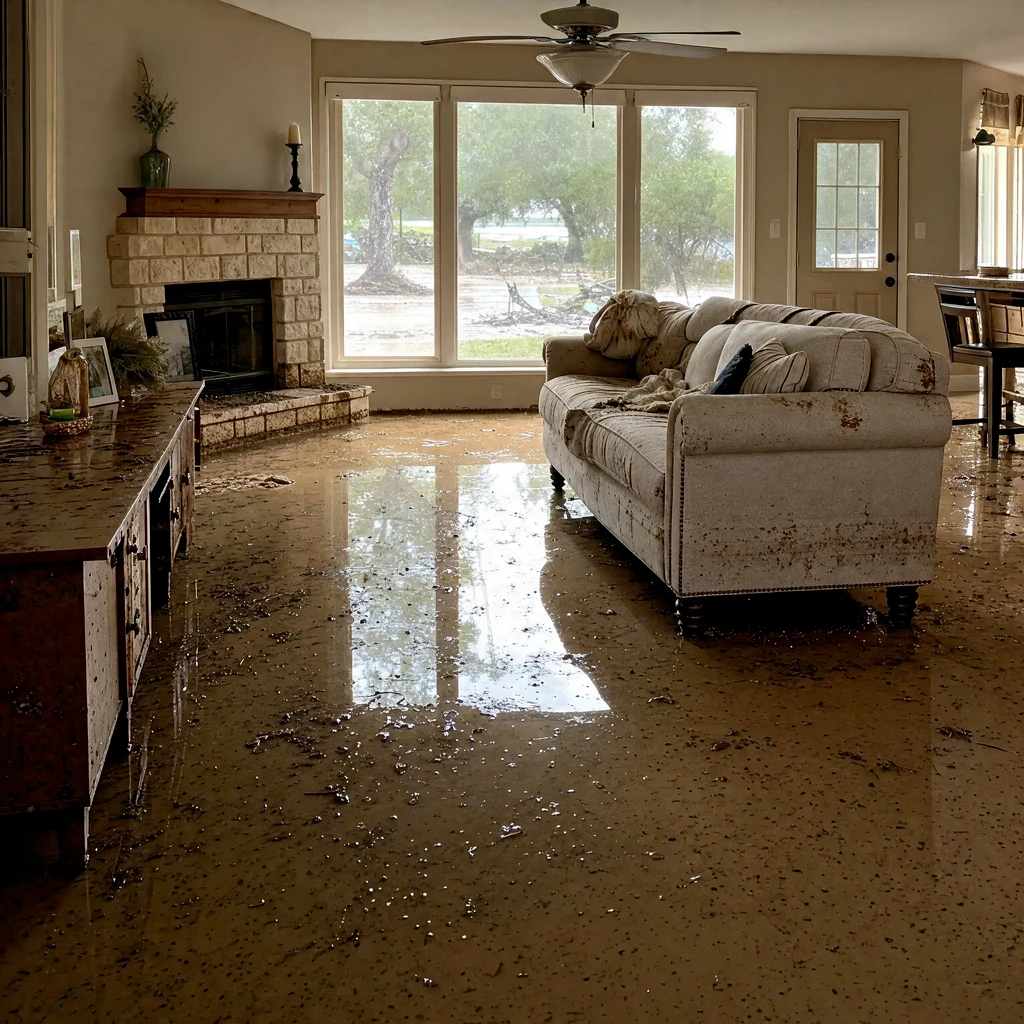
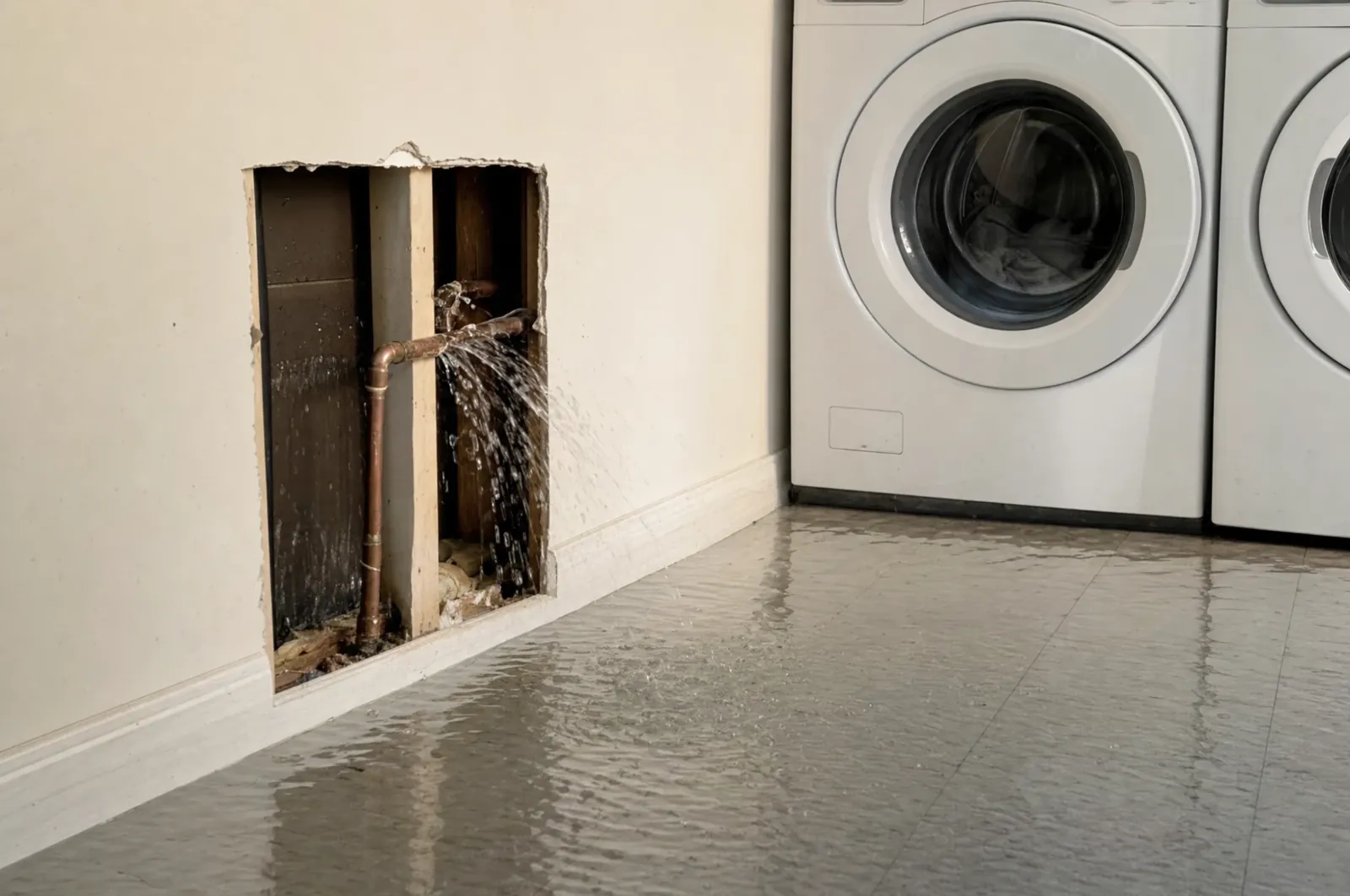
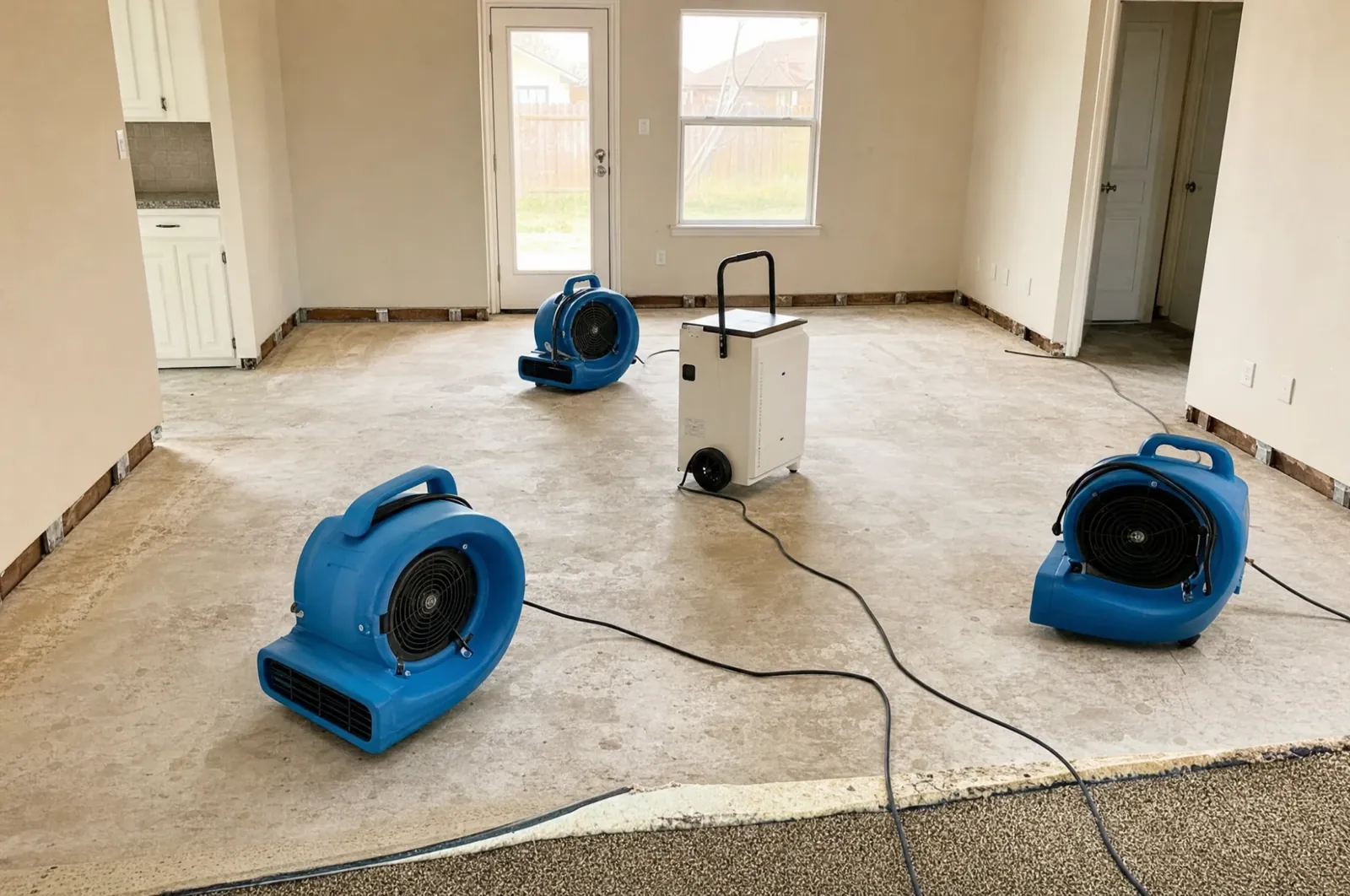
Texas gets water damage from every direction. Central Texas sits in what forecasters call Flash Flood Alley, where a few inches of rain on the Hill Country can turn a dry creek into a river within hours. The Gulf Coast deals with hurricanes, tropical storms and long stretches of humid air. North Texas sees hail, spring storm lines and the occasional hard freeze. And in every part of the state, the most common cause is still the quiet one: a supply line, water heater, dishwasher or slab pipe that gives out inside the house.
This site is a referral line. You call, tell us what happened and where you are, and we put you through to a local restoration company that handles that kind of job. You talk to them directly about the work and the cost.
What you can call about
- Water extraction and water removal: standing water on floors, in carpet or in a garage, pumped out and the area dried.
- Water damage restoration: drying, removing wet materials, and putting floors, walls and cabinets back.
- Flood damage restoration: water from outside after storms, creek overflow or flash flooding.
- Burst pipe water damage: frozen pipes, slab leaks, failed supply lines and water heater leaks.
- Sewage backup cleanup: toilets, floor drains or tubs backing up with contaminated water.
- Mold remediation: mold that grows after a leak or flood that wasn't dried in time.
The first hour matters
Water keeps moving after you stop seeing it. It wicks up drywall, soaks into the pad under carpet and runs along the slab under baseboards and cabinets. Wood flooring starts to cup, and particleboard cabinet bases swell. In warm, humid weather mold can start on damp materials within a day or two. The sooner the water is out and drying equipment is running, the less has to be torn out.
If you can do it safely: shut off the water at the main valve, turn off power to wet rooms at the breaker, move furniture and rugs off wet floors, and take photos before anything is moved or thrown away. Your insurer will want them.
Where we take calls
We currently connect callers in these Texas communities. Each page covers the local water risks and the ZIP codes in the area: Austin, New Braunfels, Houston, Pearland, Friendswood, Lewisville, The Colony, McKinney, Wylie, Garland, Grand Prairie, Mansfield and Keller. If your town isn't listed, call anyway and we'll tell you whether we can connect you.
Insurance and water damage in Texas
Most homeowners policies treat sudden, accidental water (a pipe that bursts, a water heater that fails) differently from water that came in from outside or a leak that went on for weeks. Flood water from rising creeks or storm surge is usually covered only by separate flood insurance. The restoration company you're connected with can document moisture readings and damage for your claim, but your policy and adjuster decide what's covered. Read your policy or call your agent before you agree to anything you're unsure about.