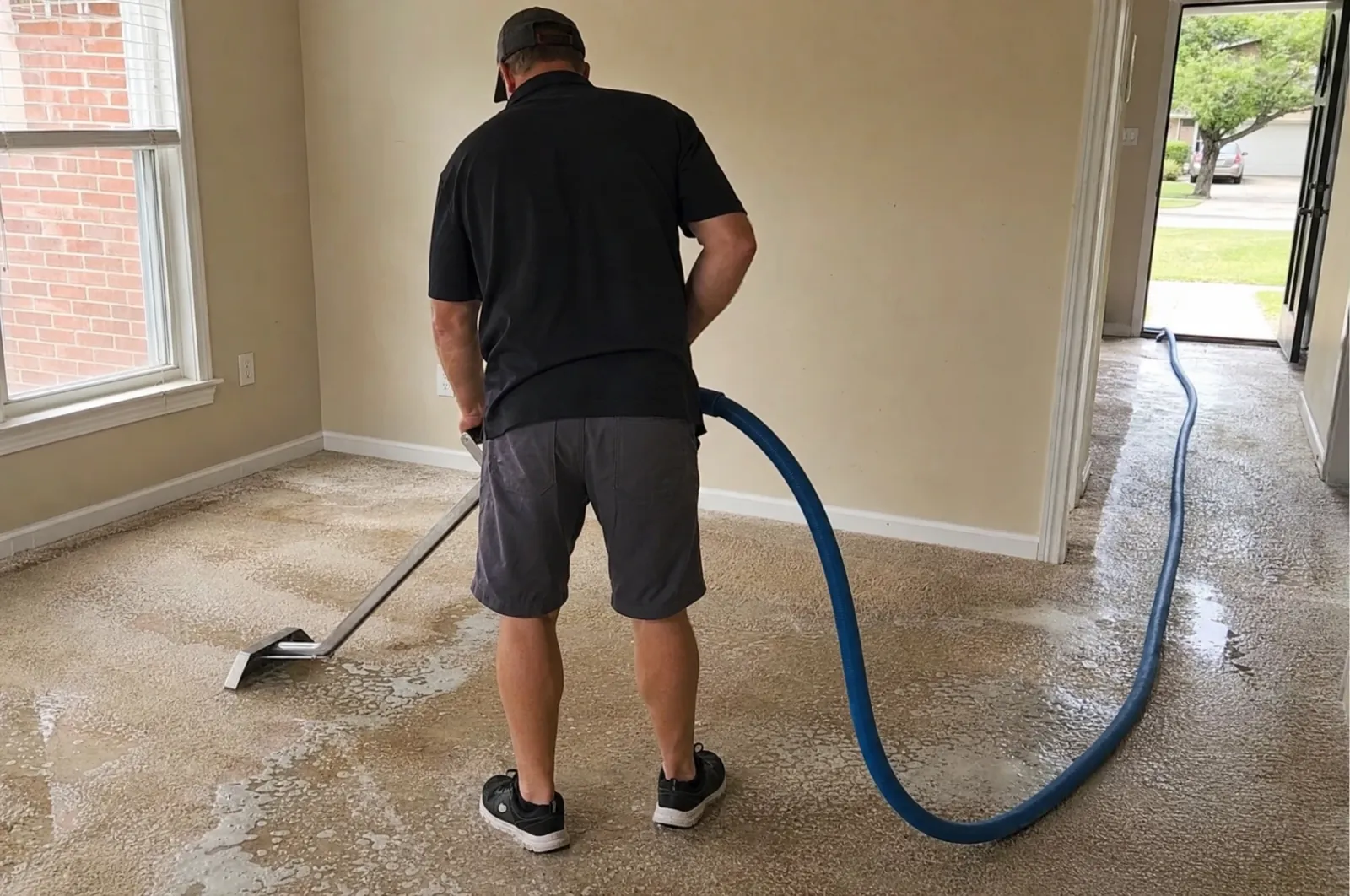
Extraction is the first step on almost every water damage job. A crew uses truck-mounted or portable extractors to pull water out of carpet, pad and hard floors, then sets air movers and dehumidifiers to dry what the extractor can't reach: the bottom of drywall, the wood under flooring, the space under cabinets and the slab itself.
Why towels and a shop vac usually aren't enough
A wet-dry vacuum gets the water you can see. The water you can't see is the problem. Carpet pad holds many times its weight in water, drywall wicks moisture upward, and concrete slabs, which almost every Texas house sits on, release moisture slowly for days. If those stay wet, baseboards swell, laminate and wood floors cup, and mold can start. Restoration crews use moisture meters to find where the water went and keep drying until readings are back to normal.
What usually happens on an extraction call
- 1The source is stopped: a valve shut, a line capped, or the outside water has receded.
- 2Standing water is extracted from floors and carpet.
- 3Moisture is mapped in walls, floors and cabinets with meters.
- 4Materials that can't be dried, often carpet pad and the bottom of some drywall, are removed.
- 5Air movers and dehumidifiers run until readings show the structure is dry.
- 6The job is documented with photos and readings for your insurance claim.
Structural drying
Drying is where most of the time goes. It depends on how much water there was, how long it sat, the materials involved and the weather. Humid Gulf Coast air slows drying, which is one reason crews close up the house and run dehumidifiers instead of opening windows. If water got into a wall cavity, the crew may drill small holes near the floor or remove baseboards to get air inside.
Related situations
If the water came from a pipe, see burst pipe water damage. If it came from outside after a storm, see flood damage restoration. If it smells like sewage, treat it as contaminated and read sewage backup cleanup before you touch it.