Grand Prairie sits between Dallas and Fort Worth and reaches into Dallas, Tarrant and Ellis counties. Joe Pool Lake is on its south side, Mountain Creek Lake is to the east, and the West Fork of the Trinity River and Johnson Creek run through the north. It's a long, varied city: older neighborhoods north of I-30 and newer subdivisions down toward the lake.
Water damage in older and newer neighborhoods
In older homes north of I-30, the calls tend to be aging supply lines, corroded water heaters and sewer line problems. In newer homes to the south, it's more often failed fittings, upstairs leaks into ceilings, AC condensate overflow in the attic and slab leaks as the clay soil moves. Either way, the steps are the same: stop the water, extract it, find where it went, and dry the structure.
Storm and flood water
Heavy rain can raise creeks and overwhelm drainage, and low-lying streets near the Trinity and Johnson Creek can take on water. Water that comes in from outside is treated as contaminated, and carpet, pad and lower drywall it touched are normally removed.
Insurance
Sudden water from a burst pipe or failed water heater is commonly covered by homeowners policies. Outside flood water usually isn't, unless you have flood insurance. The company you're connected with can document the damage, but your policy decides coverage.
North and south Grand Prairie
Grand Prairie is a long city, and the north and south ends are very different. The older north side, around downtown and along I-30 and Highway 180, has many homes from the 1950s through the 1970s, often with original plumbing and sewer lines. The south side toward Joe Pool Lake has developed mostly since the 1990s, with larger two-story homes, upstairs bathrooms and attic air handlers.
Creeks, the Trinity and drainage
The West Fork of the Trinity runs through the north end of the city behind levees, and Johnson Creek and other creeks drain through neighborhoods. Heavy rain can raise creeks quickly and overwhelm local drainage. Low-lying streets and yards near creeks are the first to see water, and in a heavy storm water can come into garages and under doors.
Grand Prairie through the year
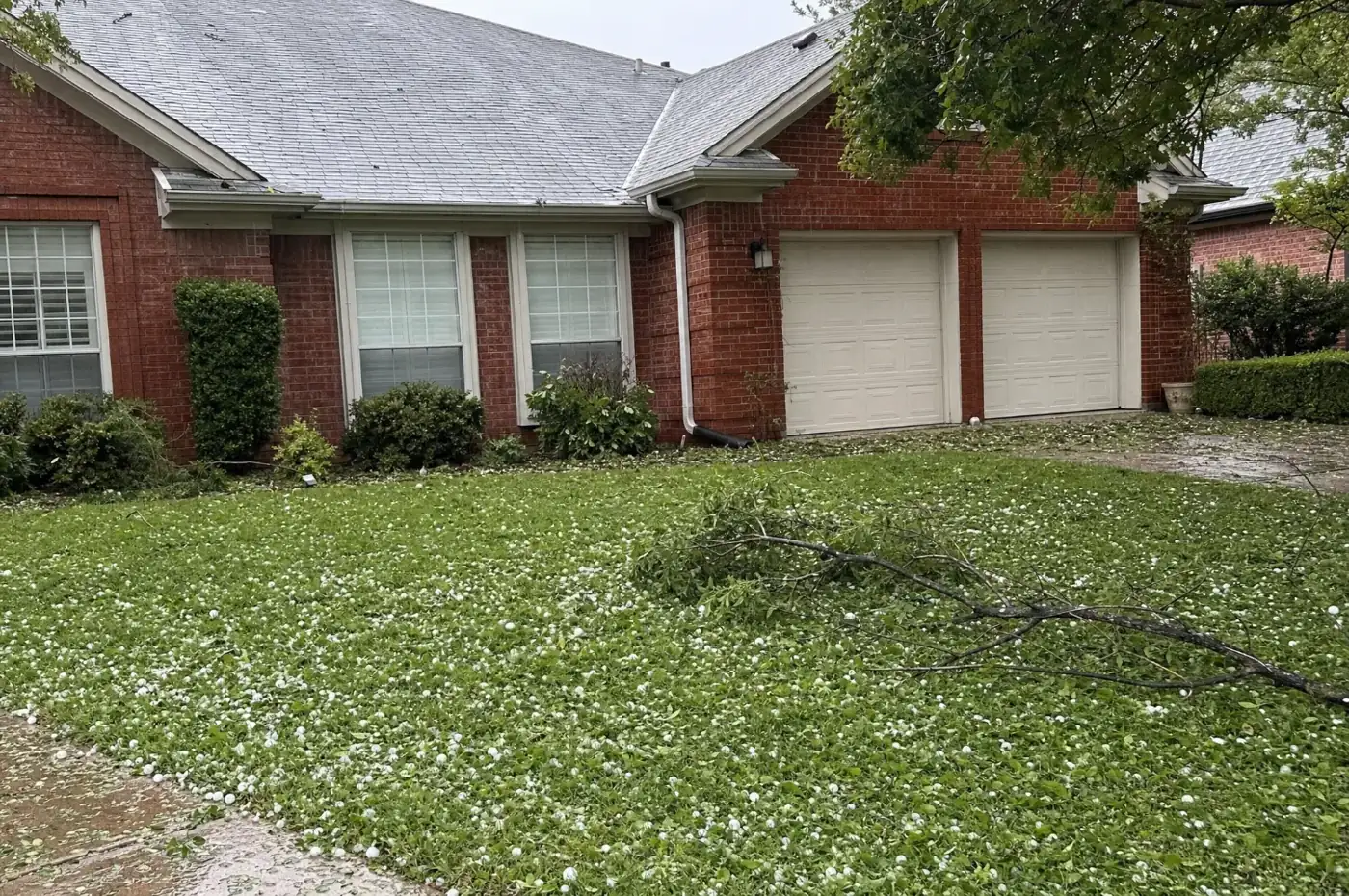
- SpringHail, wind and heavy rain. Roof leaks and storm water inside are common afterwards.
- SummerConstant AC use, condensate overflows and clay soil movement under slabs.
- FallHeavy rain that can raise creeks.
- WinterHard freezes that burst exposed pipes.
Local resources
Grand Prairie Water Utilities serves most of the city. Contact them for problems on the street side of the meter or in the city sewer. The City of Grand Prairie publishes floodplain information, and Joe Pool Lake levels are managed by the U.S. Army Corps of Engineers.
A typical Grand Prairie call
One example: in a two-story home on the south side, water starts dripping from a light fixture in the downstairs family room. An upstairs shower valve has been leaking into the floor. The power to that circuit is shut off, the crew opens the ceiling to find the wet area, removes the soaked drywall and insulation, dries the framing and subfloor, and documents it all for the claim.
ZIP codes
We connect callers in Grand Prairie ZIP codes 75050, 75051, 75052 and 75054.