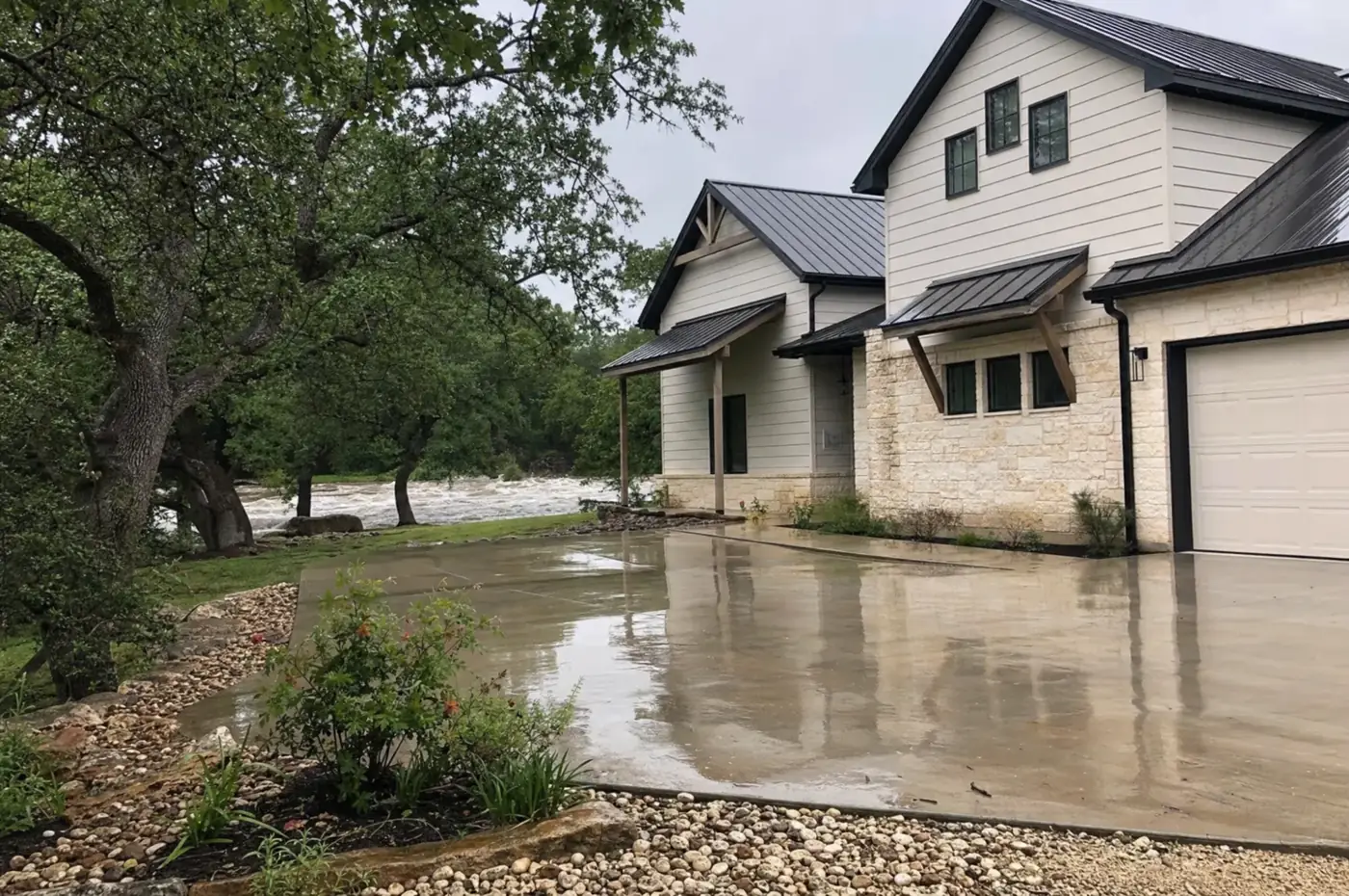
New Braunfels grew up around two rivers. The spring-fed Comal runs short and clear through town, and the Guadalupe comes down out of the Hill Country past Canyon Lake. Most of the year they're why people visit. During heavy rain they're the reason the city has a long flood history, with major floods in 1998 and 2002 among the ones people still talk about. The city straddles Comal and Guadalupe counties, and both sit squarely in Flash Flood Alley.
Flood water versus leaks
If water came in from outside, from a river, a creek or a street that turned into one, it's treated as contaminated. Carpet, pad and the lower part of the drywall it touched are normally removed, and the house is cleaned and dried before rebuilding. If the water came from a pipe, a water heater or an appliance, and it's dealt with quickly, more can usually be dried in place.
Growth and new construction
New Braunfels is one of the fastest-growing cities in Texas, and a lot of homes are only a few years old. New homes still leak. Common calls in newer neighborhoods are failed supply lines, washing machine hoses, water heater pans that overflow, and attic AC condensate lines that clog in the first few summers. Older homes near downtown and along the rivers bring their own issues, from aging plumbing to crawl spaces that take on water.
Vacation rentals and second homes
Plenty of properties near the rivers and Canyon Lake sit empty for days or weeks. A leak that starts while nobody is there can soak a house for a long time before anyone notices. If you manage a rental, a smart water shutoff or leak sensors are worth considering, and it helps to know where the main valve is before you need it.
Comal County, Guadalupe County and the Hill Country edge
New Braunfels is where the Balcones Escarpment meets the coastal plain. To the west the ground rises into limestone Hill Country with thin soil; to the east it flattens out. Rain on the hills above town reaches the rivers fast. That's why a storm that looks moderate in town can still push the Guadalupe or Comal up quickly. Low-water crossings are common in the area, and they close often in heavy rain.
Older homes near the rivers and downtown
The historic core around Landa Park, the Plaza and the older streets near the Comal has homes going back generations, some on pier-and-beam foundations. These houses can take on water in crawl spaces during heavy rain, and older plumbing tends to fail at joints and valves. If your home is near the river, it's worth knowing your flood zone and whether your policy includes flood coverage before the next storm season.
Newer neighborhoods
Subdivisions along I-35, Highway 46 and FM 306 have grown quickly. Newer homes are mostly on slabs and have their own patterns: plumbing fittings that loosen in the first years, water heater pans that were never connected to a drain, and attic AC lines that clog. Upstairs laundry rooms and bathrooms mean a leak often shows up first as a stain on the ceiling below.
Local resources
New Braunfels Utilities (NBU) provides water and wastewater service in most of the city. Contact them if the leak is on their side of the meter or you need water shut off at the street. Comal County and the City of New Braunfels publish floodplain information, and road closure information is posted during flood events.
A typical New Braunfels call
One example: owners of a river-area vacation rental arrive for the weekend to find the kitchen floor wet and the cabinet bases swollen. The supply line to the refrigerator ice maker had been leaking for days. The crew extracts the water, measures moisture under the cabinets and flooring, removes the cabinet toe-kicks to dry underneath, and checks the wall behind for mold.
Areas we take calls from
We connect callers in New Braunfels ZIP codes 78130 and 78132, including neighborhoods along the Comal and Guadalupe and the newer subdivisions off I-35 and Highway 46.
Up I-35 we also take calls in Austin, and on the coast in Houston.