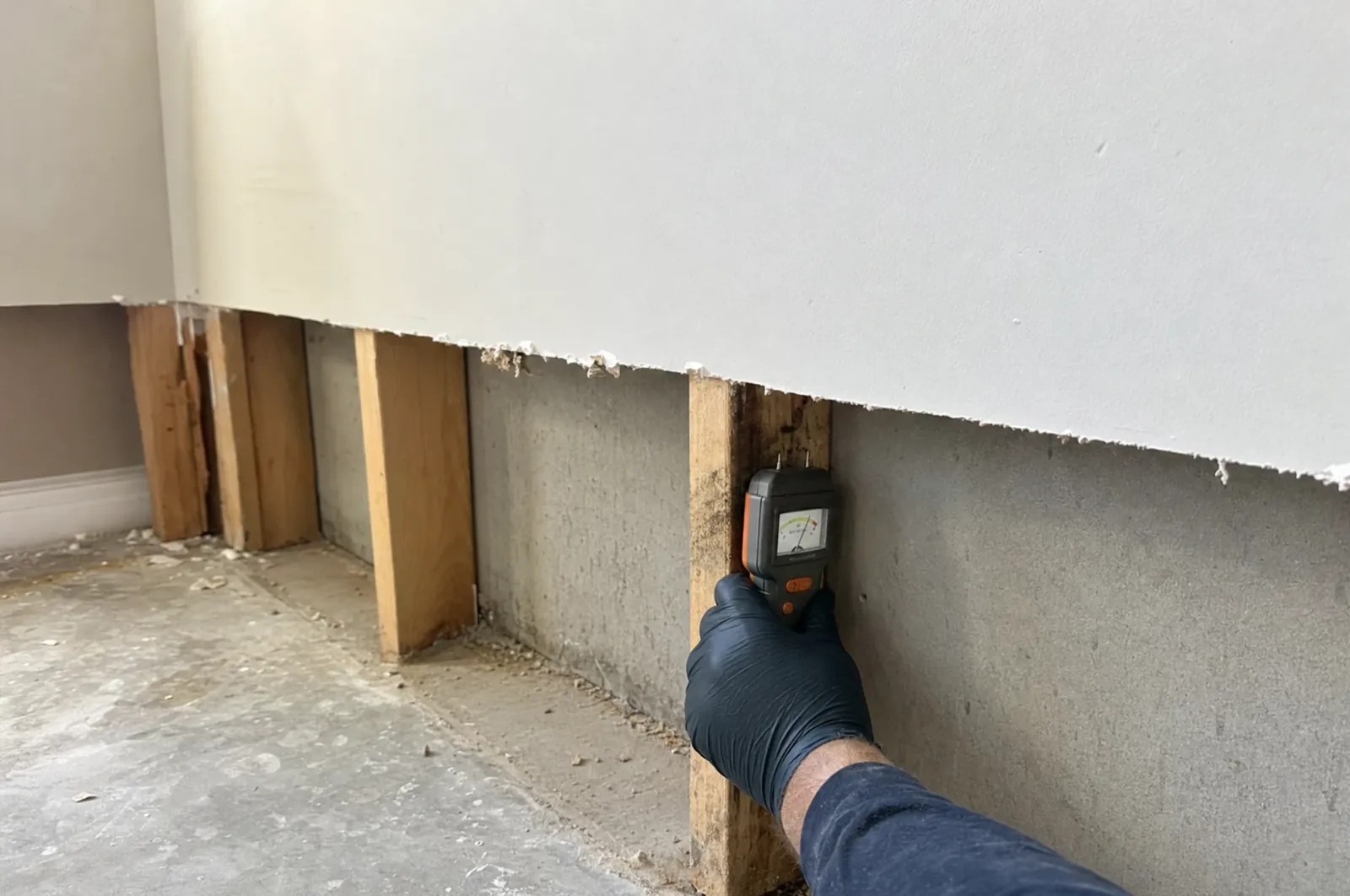
Restoration starts where extraction ends. Once the standing water is gone and the structure is drying, the work turns to what was damaged: drywall that has to be cut out, flooring that cupped or delaminated, cabinet toe-kicks that swelled, insulation that soaked through. Some companies handle drying only and refer out the rebuild. Others do both. Ask when you talk to them.
Common sources in Texas homes
- Water heaters in garages, attics and closets that leak or rupture.
- Supply lines to toilets, sinks, refrigerators and washing machines.
- Slab leaks under the foundation that show up as warm spots, damp flooring or a rising water bill.
- AC condensate lines and drain pans that clog and overflow, often in the attic.
- Roof leaks during storms, reaching the attic insulation and then ceilings.
- Outside water from heavy rain, poor drainage or rising creeks.
Clean, gray and black water
Restoration crews classify water by contamination. Clean water from a supply line is the simplest. Gray water, such as a washing machine or dishwasher discharge, carries more risk. Black water, which includes sewage and outside flood water, is treated as contaminated, and porous materials it touched are usually removed rather than dried. Clean water left sitting for days can also degrade toward gray.
Working with insurance
Take photos before anything is moved. Keep damaged items until your adjuster says otherwise. A restoration company will usually record moisture readings, photos and a scope of work. That documentation helps your claim, but your policy decides coverage.
See also water extraction for the drying stage and mold remediation if the water sat long enough for growth to start.